

Gender Toolkit: Integrating Gender in Programming for Every Child in South Asia
This UNICEF toolkit includes guidance on how to undertake a gender analysis, what needs to be in place to ensure gender is mainstreamed effectively and how gender can be integrated into the programming and results for young children.
December 31, 2018

Scaling Up an Early Childhood Development Programme Through a National Multisectoral Approach to Social Protection
This article published in BMJ describes how intersectoral collaboration between health, social protection, and education sectors enabled Chile Grows with You (Chile Crece Contigo) to help all children reach their full developmental potential.
December 7, 2018
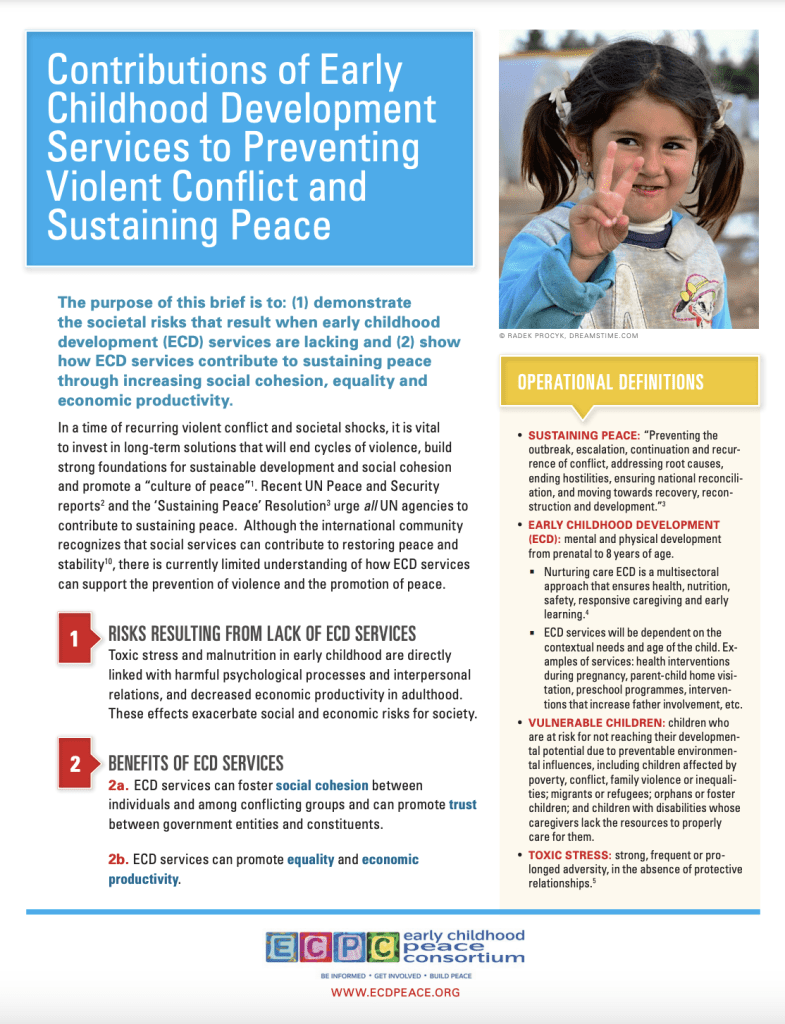
Contributions of Early Childhood Development Programming to Sustainable Peace and Development
August 9 2024 - This background paper thereby follows in the footsteps of the 2030 Agenda for Sustainable Development which acknowledges that “there can be no sustainable development without peace, and no peace without sustainable development.” It exemplifies the role of ECD in supporting the achievement of the SDGs, and in particular Goal 16.
December 1, 2018
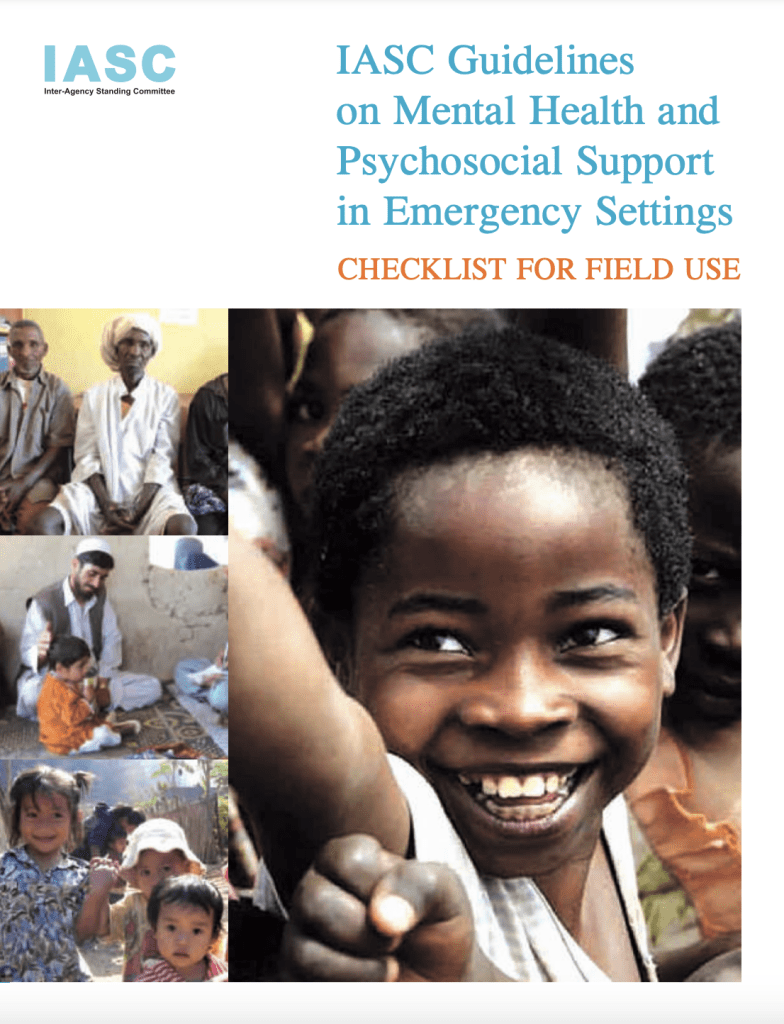
IASC Guidelines on Mental Health and Psychosocial Support in Emergency Settings and Accompanying Field Checklist
These Guidelines reflect the insights of practitioners from different geographical regions, disciplines and sectors, and reflect an emerging consensus on good practice among practitioners. The core idea behind them is that, in the early phase of an emergency, social supports are essential to protect and support mental health and psychosocial well-being. In addition, the Guidelines recommend selected psychological and psychiatric interventions for specific problems.
December 1, 2018
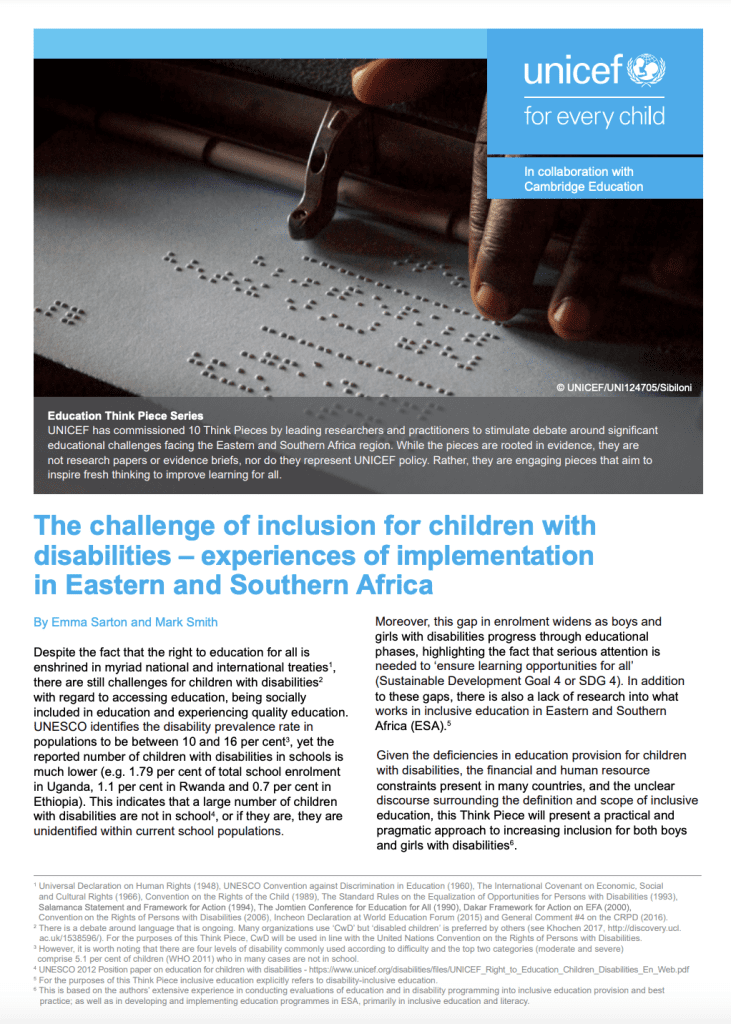
The Challenge of Inclusion for Children with Disabilities
This Think Piece from UNICEF starts by identifying three tensions within the inclusion debate that inhibit and constrain the journey towards more inclusive schools and better educational experiences for disabled children. It then moves on to provide a practical model that aims to reduce these tensions and that teachers, schools and ministries of education can use to create more inclusive education opportunities. The Think Piece concludes with a summary of the implications for the model at different levels within the education system.
December 1, 2018