
By Ferdousi Khanom, Senior Lecturer & ECD Academic Lead, BRAC Institute of Educational Development (BRAC IED), BRAC University
July 29, 2025 – Bangladesh has witnessed a significant increase in women’s participation in the labor force, particularly in the manufacturing sector, as highlighted by this labor force survey 2022. This shift underscores the critical need for affordable, accessible, and high-quality childcare services to enable women’s economic engagement and support child development.
The Context of the Country
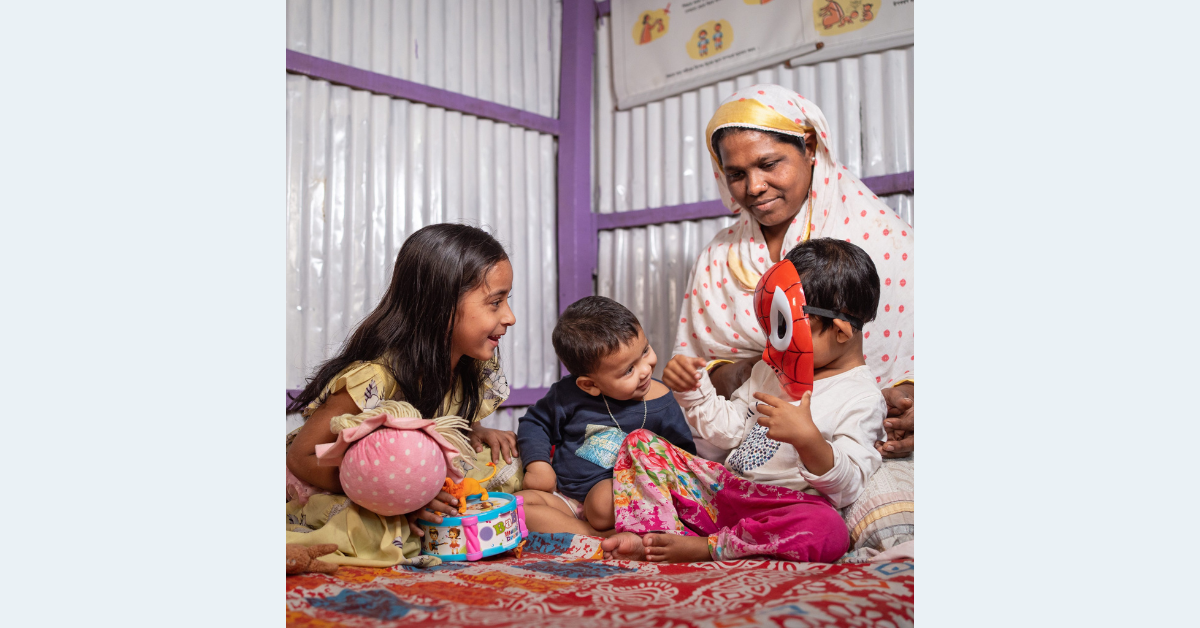
The government has initiated programs, such as childcare centers in select regions, but these efforts remain limited in scale. Currently, there are few centers run by the government that are operational, most of which are located in urban areas. Alongside these efforts, childcare needs are being met through alternative models such as private daycare centers, employer-supported facilities, and community-based childcare providers. However, access to these services remains limited, disproportionately affecting low-income families. Bridging this gap is essential for ensuring equitable access to childcare, fostering child development, and enabling more women to participate fully in the workforce. Informal childcare options, particularly home-based setups supported by women within the community, play a critical role in closing these gaps. BRAC’s home-based childcare ensures a safe place for children to get care from skilled care providers who are trained to cater to children with necessary knowledge on safety, security, and child developmental stimulation.
The Challenges Facing Young Children and ECD Service Delivery
In Bangladesh, childcare services are offered through a combination of government-led daycare centers, private daycare facilities, and informal home-based childcare setups. While these services aim to meet the growing demand for childcare in Bangladesh, they face significant challenges, limiting their accessibility and affordability. Government-run daycare centers are limited and mainly focus on urban and semi-urban areas, limiting their accessibility for the broader population. Private daycare centers, though effective for high-income families, remain unaffordable for most. Meanwhile community-based setups, though accessible, often lack trained caregivers, proper infrastructure, and safety standards. Affordability is a major issue, as most services are beyond the reach of low-income families. Urban centers face space shortages, making it difficult to establish safe childcare facilities. Many caregivers lack training in early childhood development (ECD), leading to inadequate stimulation and learning opportunities for children. Moreover, services often fail to integrate essential aspects such as nutrition, mental health, and early education.
BRAC’s Focus on Systems Thinking
BRAC’s home-based care model is a culturally rooted and comprehensive care model that emphasizes the interconnected well-being of children, mothers, and care providers. This model builds on the informal, home-based childcare systems already present in communities, creating a co-dependent ecosystem where mothers can entrust their children to a local care provider while pursuing economic opportunities. Beyond childcare, BRAC ensures that the well-being of mothers and care providers is prioritized through mental health support, training, and community recognition, fostering a sustainable environment for all stakeholders. Moreover, to address the challenges of ECD service delivery, BRAC emphasizes capacity building for entrepreneurs by providing training in areas such as ECD, mental health support, safety and safeguarding, nutrition, and business development. This holistic approach enables caregivers to deliver high-quality childcare while managing their services as sustainable enterprises, empowering them to grow as entrepreneurs.
Systems mapping plays a critical role in BRAC’s approach, enabling the identification of core stakeholders and operational gaps. The model development process is iterative, and systems thinking has significantly influenced approaches to identifying and addressing potential factors deeply rooted in the community. This interdisciplinary approach connects gender, mental health, and ECD with broader societal goals, ensuring that the home-based care model not only serves immediate needs but also aligns with long-term development priorities. Through a systems thinking approach, BRAC continues to advocate and make research collaborations with organizations to link women’s empowerment with child development outcomes. By identifying stakeholders at community, organizational, and governmental levels, BRAC is aiming to develop a capacity-building framework to mobilize support and localize the systems map for childcare.
The Results of Systems Thinking
The integration of systems thinking into BRAC’s home-based care model has meaningfully influenced our approach, driving iterative improvements and fostering a deeper understanding of the model’s potential. For example, stakeholder mapping has played a pivotal role in identifying and engaging key players across sectors, enabling effective partnerships or collaboration with the government, community leaders, and organizations. This strategic alignment has allowed ECD experts and the BRAC team to localize the systems map while broadening its scope and impact through collaborative efforts with stakeholders and government counterparts in the future.
By addressing interconnected issues such as women’s empowerment, mental health, and ECD, the systems thinking framework has enhanced the care model, thereby developing the team’s ability to understand and tackle complex challenges holistically. This approach has enabled the identification of key stakeholders, operational gaps, and innovative solutions, fostering a sustainable and inclusive model that empowers women, enhances caregiver and child well-being, and promotes holistic child development.
Lessons From Our Journey
The childcare systems mapping process has been instrumental in driving critical insights for BRAC’s home-based care model. As a result-oriented process carried out with a group comprising national and international psychologists, gender specialists, and ECD experts, systems thinking has enabled a comprehensive approach to childcare development, ensuring alignment with the needs and challenges of childcare service delivery.
The process has also enabled us to contribute significantly to shaping sustainable, context-specific solutions by emphasizing the integration of diverse stakeholders, some of whom might not traditionally be associated with childcare. Moreover, by adopting a systematic approach rather than a siloed perspective, systems mapping has facilitated an in-depth analysis of systemic challenges, thereby enhancing our problem-solving capacity. This has allowed for the development of effective strategies tailored to the socio-cultural context of Bangladesh, ensuring the long-term viability and impact of the care model.